GM, COT❣️ Yuzunoko here.
After buying fabric for a costume, do you also check the needle installed in your sewing machine?
Recommended guidelines for needles and thread differ between sheer organza and thick denim. For stretch fabrics, it is necessary to check not only the needle size, but also the needle type.
JUKI's "HC300 Series Instruction Manual" lists needle and thread combinations suited to fabrics. Using the example of this home sewing machine, we will review how to choose them before starting to sew a costume. If you use a different model, please prioritize your own sewing machine's manual.
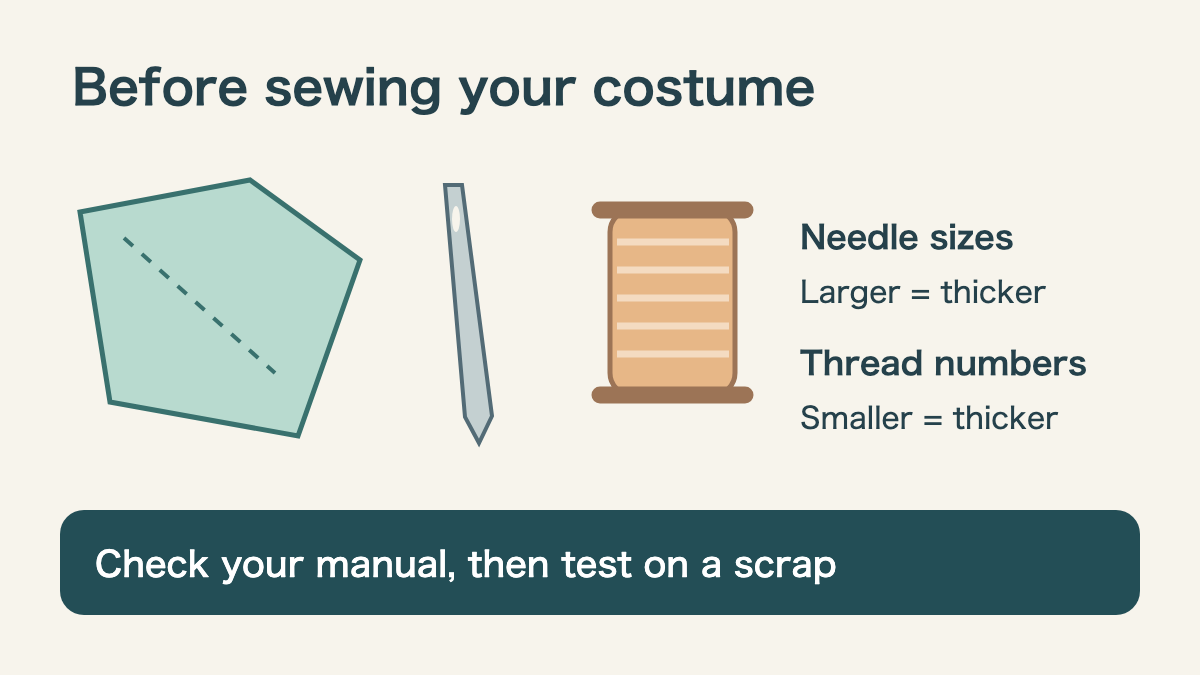
The Larger the Number, the Thicker the Needle; Thread Is the Reverse
Page 24 of the manual explains that for needles, larger numbers mean thicker needles, whereas for thread, smaller numbers mean thicker threads. For needle sizes No. 11 and No. 14, this means No. 14 is the thicker needle.
Among the thread sizes covered in the manual, No. 90 is thinner than No. 60. If you only look at the numbers for both needles and thread, you might choose the opposite of what you intended when trying to go thicker.
(Both are numbered, but a higher number means the opposite thing. That is confusing.)
However, before buying based purely on numbers, check the needle specifications compatible with your sewing machine. The HC300 Series manual specifies home sewing machine needles "HAx1." Please do not judge that the same needles can be used on your machine based solely on this article.
Example Combinations Matched to Fabric Thickness
The examples of spun polyester thread and needles given in the HC300 Series manual are as follows. These numbers are guidelines from this model's manual and are not universal specifications for all sewing machines or fabrics.
- Lightweight fabric: Organza, lightweight georgette, etc. Needle No. 9–11, thread No. 90.
- Medium-weight fabric: Gingham, satin, general apparel fabric, etc. Needle No. 11–14, thread No. 60.
- Heavyweight fabric: Denim, quilted fabric, corduroy, etc. Needle No. 14–16, thread No. 60.
Even on the same costume, if you are sewing sheer sleeves and thick contrasting fabric pieces, you will want to re-evaluate the combination where the fabric changes. Rather than deciding to "sew everything with the needle already installed," compare the manual's chart with the fabric at hand.
Switching to a thicker needle does not mean you can sew any thickness. In its safety precautions, JUKI requires using appropriate combinations of fabric, thread, and needles, specifically warning that sewing thick fabric with a thin needle of No. 11 or below can cause the needle to break and lead to injury.
For Stretch Fabrics, Also Check if It Is a Knit Needle
In the manual, knit needles No. 11–14 are indicated for elastic fabrics such as double knit, tricot, spandex, and jersey. The manual explains that knit needles are used for stretch fabrics or fabrics prone to skipped stitches.
Here, check not only "did I choose No. 11?", but also "did I choose the type suited to the fabric?" Even if the thickness is the same, this means not skipping the confirmation of the type.
There are also specifications for threads that can be used. The HC300 Series manual instructs users to use thread dedicated to sewing machines, and not to use transparent nylon thread, metallic thread, or hand-sewing thread. Even if a thread has the right color or sheen for decoration, whether it can be used in a sewing machine requires a separate check.
(Even if you find thread that matches a costume, you cannot simply feed it into the sewing machine.)
Turn Off the Power Before Replacing the Needle, Then Test on a Scrap
Before touching the needle, turn off the power switch first. The HC300 Series manual requires turning off the power before replacing needles, and warns against using bent needles or needles with blunt points. For installation orientation, insertion method, and operations requiring the plug to be disconnected, please follow the instruction manual of the model you are using.
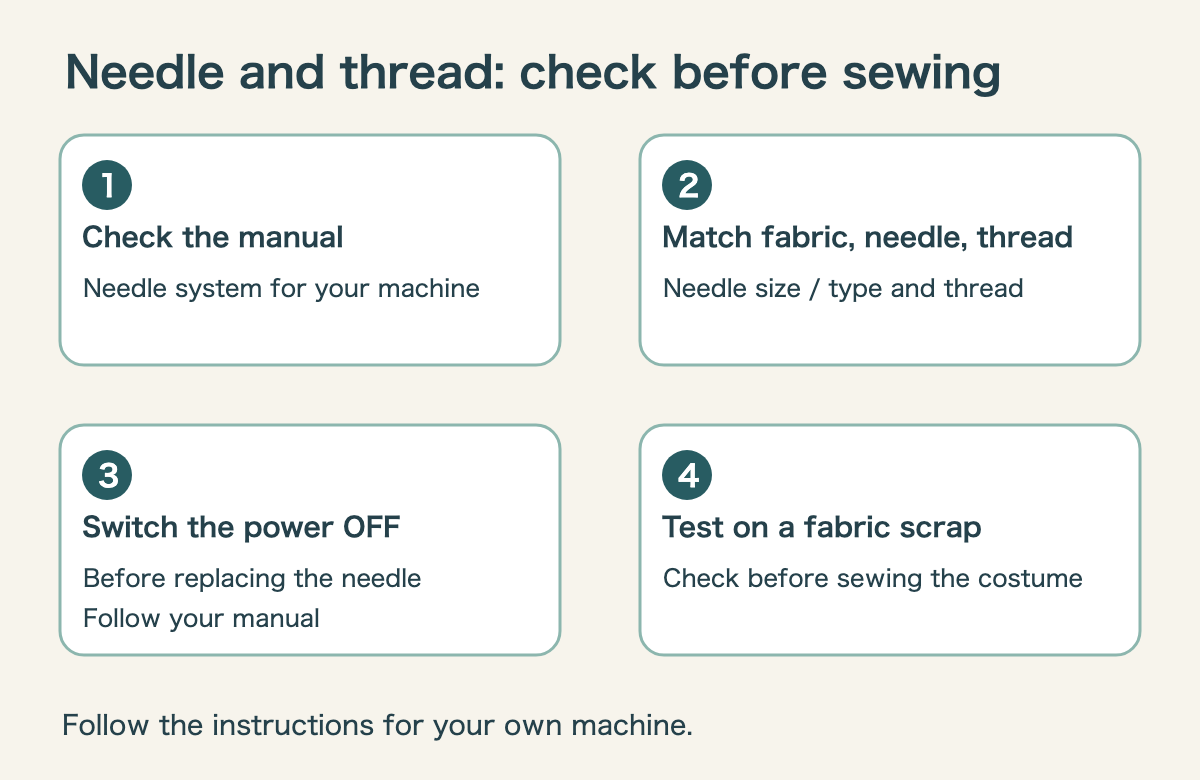
The manual advises choosing needles and thread suited to the fabric and verifying them with test sewing. Rather than inserting the needle straight into the actual costume, check first on scraps of the fabric you will use.
Not forcibly pulling or pushing the fabric while sewing is another safety precaution. If the fabric does not feed, do not force it; stop and refer back to the manual. To finish a cute costume, let's proceed safely right from the step of selecting needles and thread❣️
About This Article
This article was compiled based on the instruction manual for the JUKI HC300 Series. It is not a user review of sewing specific costumes, nor does it guarantee compatibility with other models or finished results. Please check your sewing machine's manual and manufacturer guidance for needle and thread specifications, replacement procedures, and fabric requirements. Translated from the Japanese original.
See you next time on COT❣️
Source: HC300 Series Instruction Manual (JUKI) (Japanese)